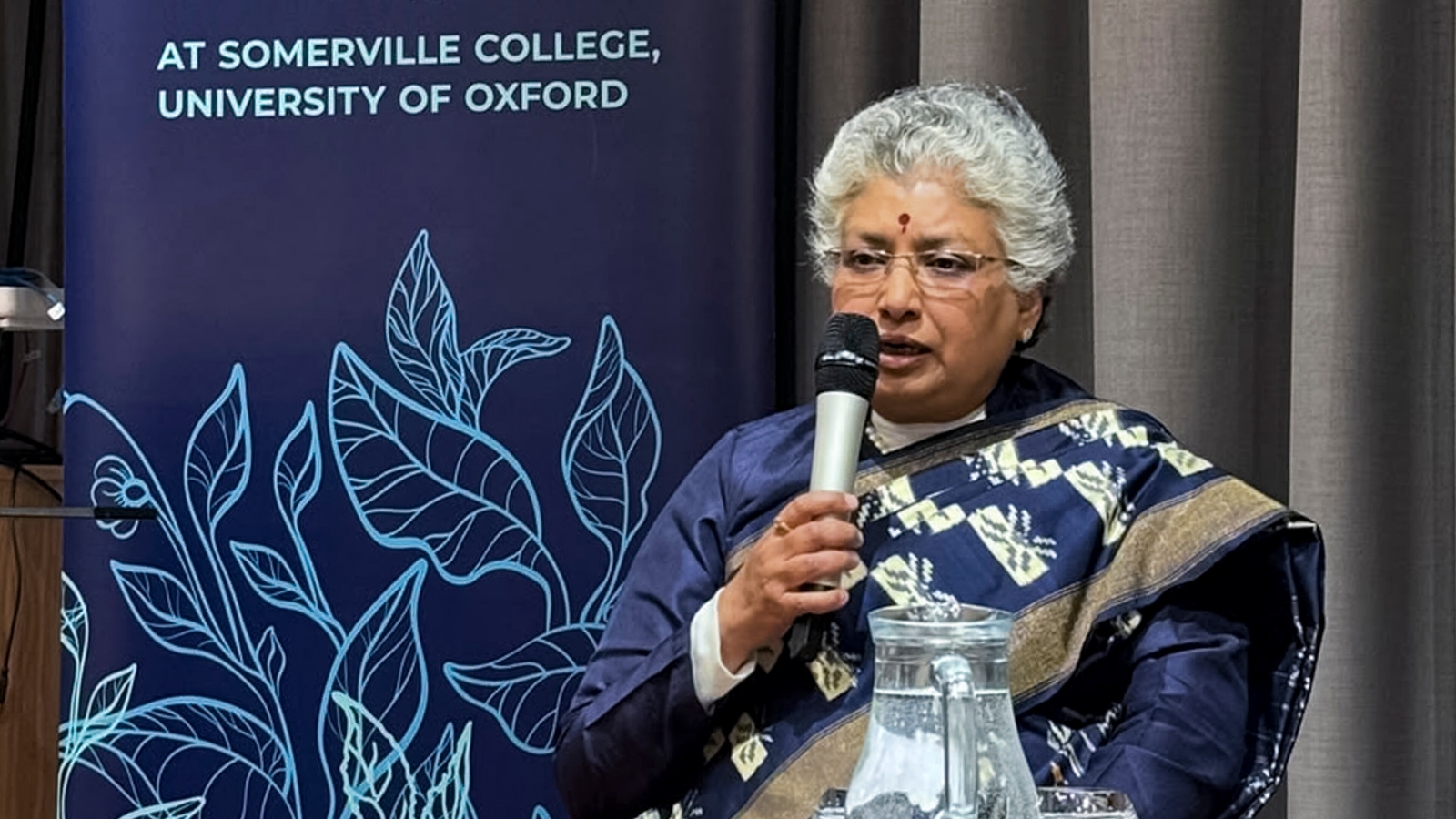
Supreme Court judge BV Nagarathna, who is in line to become India's first woman Chief Justice, has said the presence of women in high public offices does not mean gender equality has been achieved across society. She called for a deeper examination of the structural barriers that continue to prevent women from accessing education, employment and professional opportunities.
Speaking at the inaugural Cornelia Sorabji Memorial Lecture at Somerville College, University of Oxford, earlier this week, Justice Nagarathna said a few distinguished women in public life cannot be taken as a reflection of the actual position of women across the country. She stressed that substantive equality must account for the diversity of women's experiences. "I have had the benefit of education and a career to pursue but there are many women in India who find it difficult to pursue education or have a career, even though well qualified," she said, adding that Indian society, particularly the male society, needs to introspect on this critical aspect if the cherished goals of the Constitution are to be achieved by the women of India.
Justice Nagarathna also called for one-third representation for women lawyers on government panels, including those representing public sector undertakings and providing legal aid. She said women's participation in the legal profession must extend beyond entry to opportunities for professional advancement and institutional leadership. Her observations come against the backdrop of persistent gender imbalance in India's higher judiciary, with the Supreme Court currently having three women judges among its 37 sitting judges, and women accounting for only 111 of the 781 sitting judges in the country's 25 high courts, or around 14%, according to the latest available figures. Justice Nagarathna is expected to become India's first woman Chief Justice in September 2027, although her tenure at the helm will be brief.
In her lecture, she traced the evolution of women's rights from the colonial legal order to the constitutional promise of equality, arguing that the journey remained unfinished despite significant legislative and judicial advances. She discussed landmark judgments, including the Supreme Court's 2005 recognition of daughters as equal coparceners in ancestral property, the Vishaka guidelines against workplace sexual harassment, and rulings challenging gender-based restrictions in employment and the armed forces. She cautioned against measuring progress merely through the number of discriminatory laws struck down or beneficial statutes enacted, pointing to persistent barriers in women's safety, economic independence and access to justice. The disproportionate burden of unpaid domestic and care work continued to shape women's choices, she said, adding that equality must also recognise how caste, class, disability, religion, region and economic circumstances create different experiences of disadvantage.