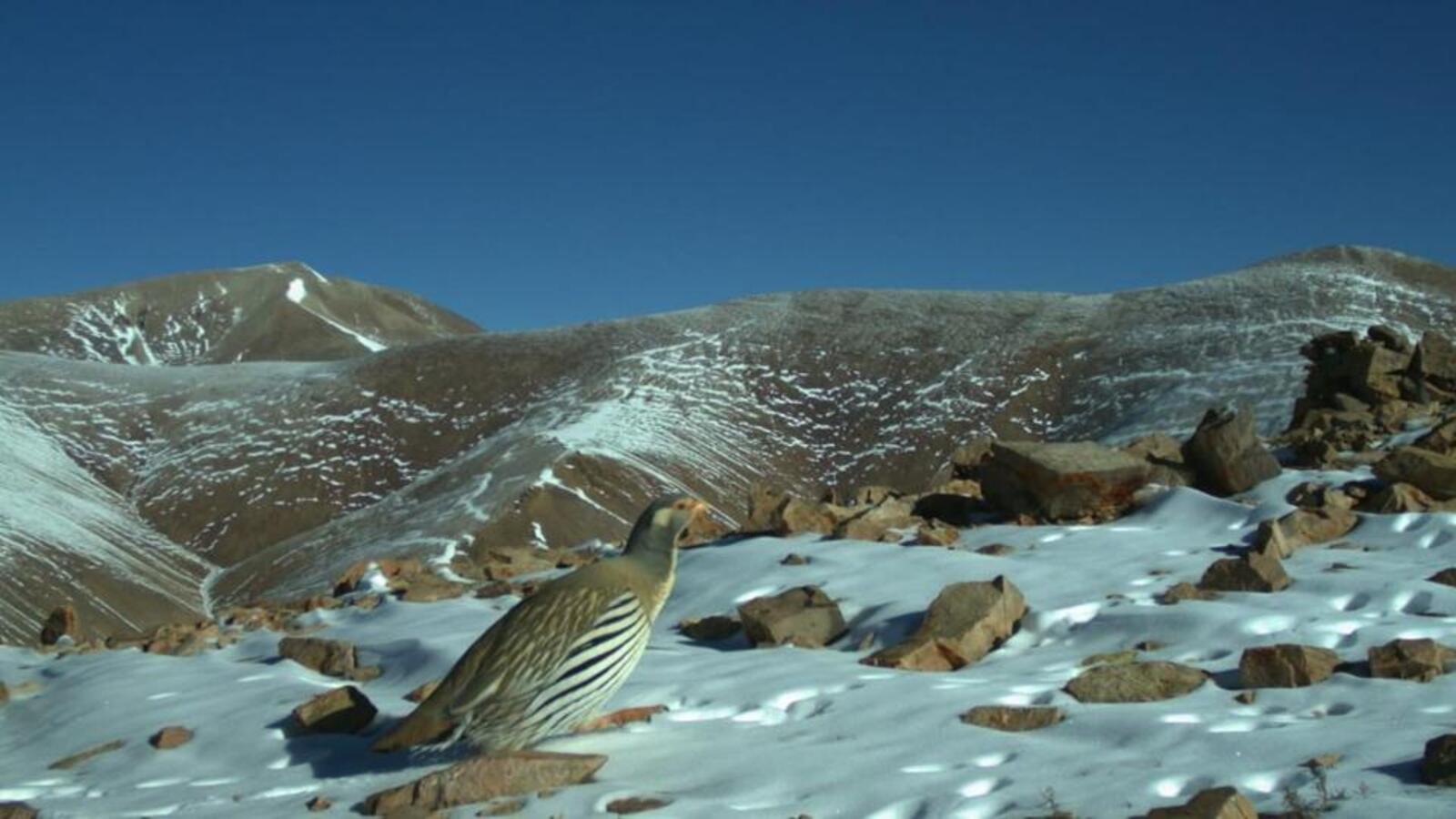
A study by Wildlife Institute of India scientists has found that 26 of 55 bird species recorded in Uttarakhand's high-altitude Gangotri landscape were documented above their previously published upper elevational limits. The findings are based on three years of camera trap data and were published in Environmental Monitoring and Assessment.
The study examined 551 confirmed bird detection events across 55 species, gathered between 2016 and 2018 from 228 camera trap stations at elevations of 2,500 to 5,250 metres in the Bhagirathi river basin, covering parts of Gangotri National Park and adjoining areas of the Uttarkashi Forest Division. It was published online on November 19, 2026.
Of the 55 species detected, 26 were recorded at least once above their published upper limits, accounting for 137 above-limit records, while 14 species showed repeated above-limit detections across multiple camera stations. These included the Olive-backed Pipit, Trumpeter Finch, Himalayan Monal, Snow Pigeon and Himalayan Snowcock, among others. Some species appeared far higher than their published ceilings, including the red-wattled lapwing (maximum exceedance of 3,286 m) and Brahminy starling (2,466 m), though the study said several large exceedances came from small numbers of detections and require verification.
Project scientist Vineet Dubey said targeted surveys and repeated observations would be needed to determine whether these records represent persistent local populations, transient occurrences or gaps in existing distributional information. He added that the team has cautioned against treating the snapshots as proof of recent, climate-driven upward range shifts. The researchers also noted that camera traps were originally set up primarily for large mammals and ground-dwelling Galliformes, making bird records incidental.