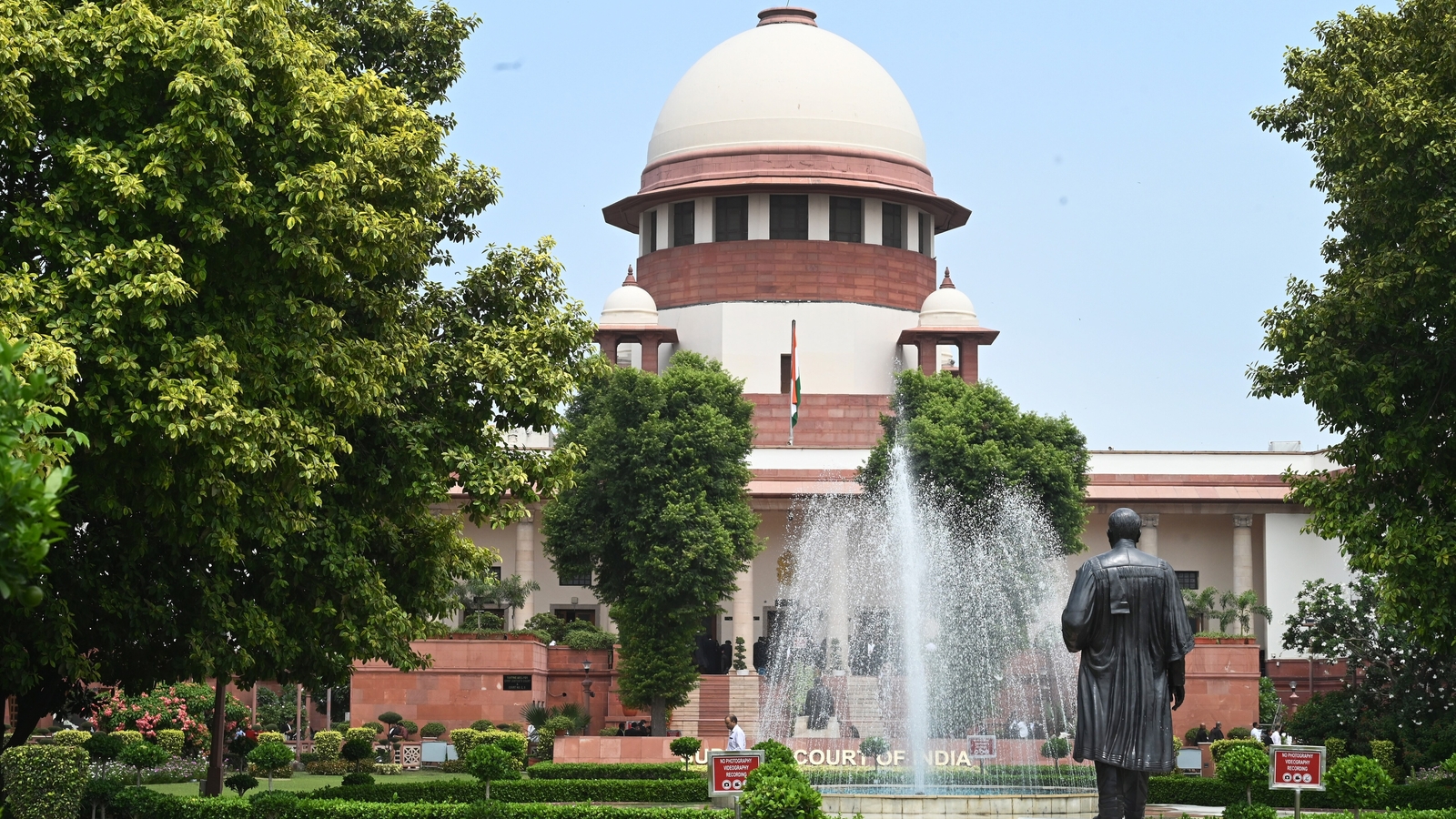
The Supreme Court on Monday enhanced to ₹30 lakh the compensation for a Chhattisgarh man who remained in jail for over seven years after his acquittal in a murder case, setting aside a high court order that had awarded him only ₹2 lakh. Justices Augustine George Masih and Sanjeev Sachdeva said compensation for wrongful loss of liberty must be adequate to give the victim a genuine opportunity to rebuild his life with dignity, and cannot be reduced to symbolic or nominal relief.
The case concerned Devilal Gond, arrested in December 2012 in a murder case and sentenced to life imprisonment by a trial court in August 2013. The Chhattisgarh high court acquitted him on January 20, 2018, but he stayed behind bars until May 19, 2025 — seven years, three months and 29 days after acquittal. The state government attributed the prolonged detention to a communication and coordination failure between prison authorities and legal aid functionaries; the discrepancy was detected during a records verification exercise in May 2025.
Calling the episode a case of "complete remissness" and "institutional dysfunction", the court said Gond had lost the prime years of his youth — he was around 28 when acquitted and 35 when released — because of the authorities' apathy. It said no monetary award can fully compensate for the loss of liberty, time and opportunities that can never be restored, and that enabling a wrongfully incarcerated person to regain self-sufficiency was the bare minimum to redress the injustice, not an act of charity by the state.
The state has been directed to pay the enhanced relief in four weeks. Of the ₹30 lakh, ₹5 lakh will go to Gond's savings account and the rest into an interest-bearing fixed deposit in his name, with monthly interest credited to his account; he cannot withdraw, prematurely encash or take a loan against the FD without permission from the district legal services authority. The judgment also flagged the absence of a legislative framework in India to compensate and rehabilitate victims of wrongful incarceration, and asked all high courts to consider safeguards along the lines of those introduced by the Madhya Pradesh high court after an earlier Supreme Court ruling.