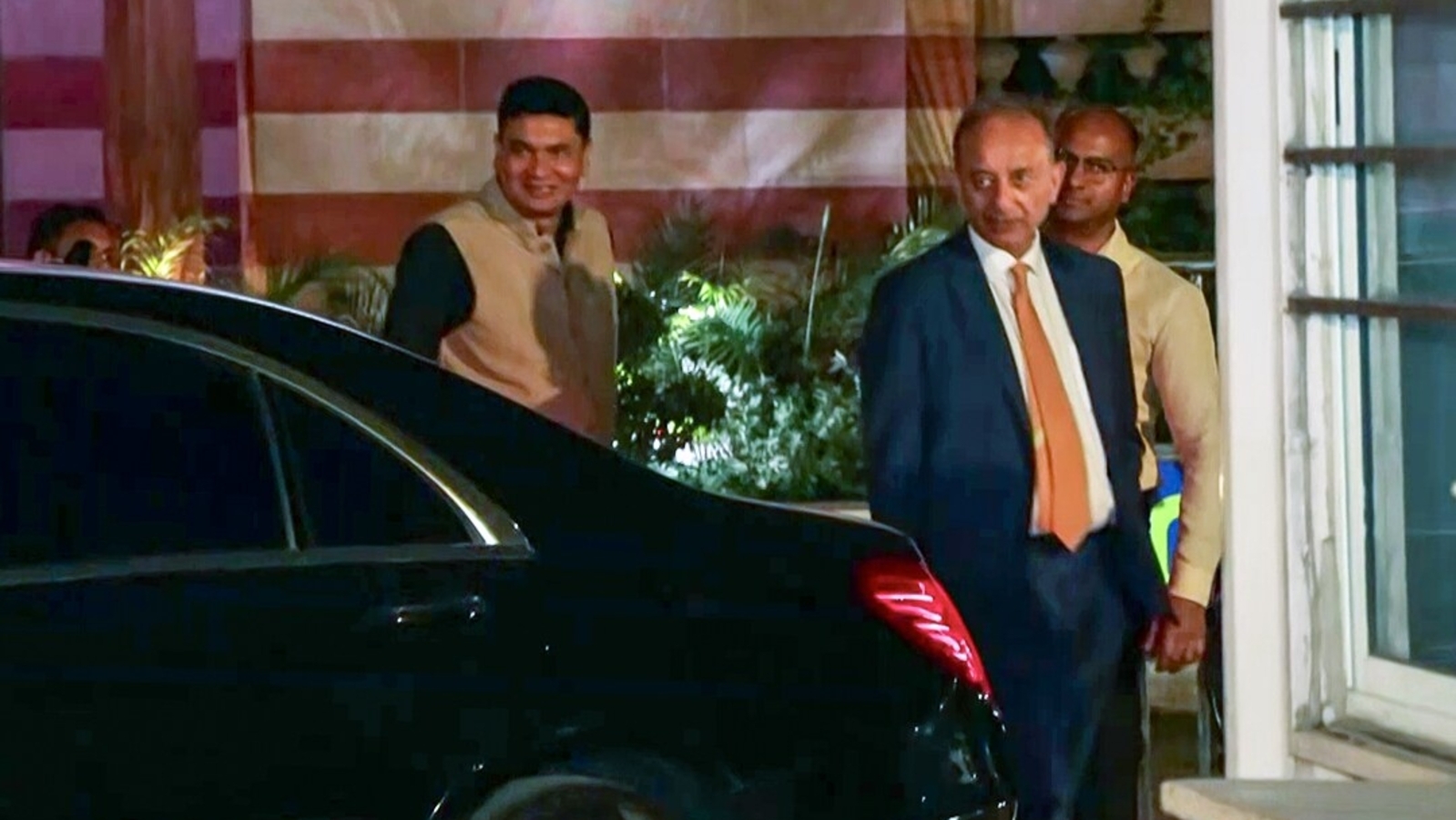
Pakistan minister Musadik Malik, speaking at the SCO Civilisational Dialogue Forum in Delhi, invoked Mughal Emperor Humayun and Sher Shah Suri, both linked to the construction of the Purana Quila, and described the old fortress as a story of multiple layers of history. India is hosting the three-day civilisational summit at the historic Purana Quila precinct, which Prime Minister Narendra Modi inaugurated on Friday evening in the presence of various SCO delegates, including Malik. He posted a video of his remarks on his X handle and wrote in Urdu that the Quila is a "story".
Addressing the thematic session "Civilisational and Cultural Expressions", chaired by Union Culture Minister Gajendra Singh Shekhawat, Malik said the fort's foundation was laid by Humayun, who had Timurid lineage and came from Central Asia, and that Sher Shah Suri, an Afghan, further built on it. "One wall, two rivals, meaning two rulers and one fort, meaning two layers and one trench," he said. Humayun was the second Mughal emperor, and his tomb in the Nizamuddin area, a UNESCO World Heritage Site, lies not far from the Purana Quila. According to the culture ministry's website, it is the first garden-tomb on the subcontinent and a pioneering example of Indo-Islamic architecture.
Malik said dialogue is between distinct identities and diversity, and that the gathering was meant to celebrate many voices, many identities and the free flow of ideas among them. He added that wisdom lies in embracing and embellishing this diversity, and that it also requires courage, without elaborating. The visit marks his first to India amid unease in India-Pakistan ties since the 2025 Pahalgam attack.
India is hosting the SCO forum at the centrally protected Purana Quila to showcase its civilisational wealth and the multiple layers of its history. A special site exhibition, "Astitva -- The Essence of our Existence", offers delegates an immersive account of Delhi's history through archaeological evidence dating from 1,200 BC to 1200 CE, including excavated remains, artefacts and architectural fragments.