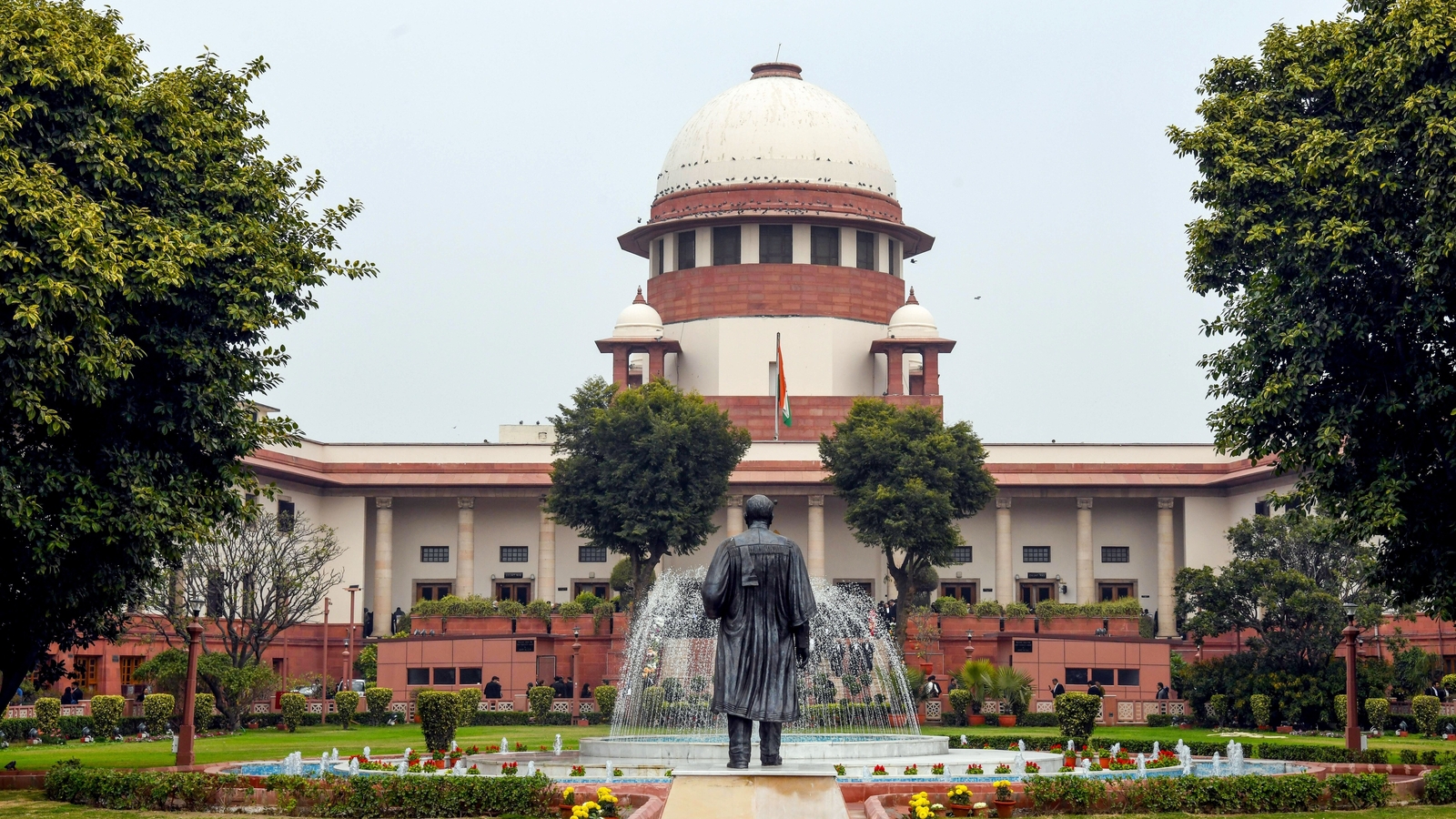
The Supreme Court on Monday stayed the Allahabad High Court's January 5 order directing the reinstatement of IIT-Kanpur professor KS Venkatesh, who was compulsorily retired in 2013 in connection with a sexual harassment case. A bench of Justices Aravind Kumar and Vipul M Pancholi issued notice and ordered that the High Court's direction shall remain stayed, acting on an appeal by the IIT-Kanpur Board of Governors.
Appearing for the board, Solicitor General Tushar Mehta described the allegation as "serious" and said the High Court had not considered the gravity of the charges against the professor, passing the reinstatement order after finding flaws in the procedure followed to process the complaint.
The professor, who claims to have a visual disability, had approached the High Court saying he was denied a defence assistant during proceedings before the Internal Complaints Committee (ICC), which enquired into the complaint under the Sexual Harassment of Women at Workplace (Prevention, Prohibition and Redressal) Act, 2013, and the IIT Kanpur (Inquiry into Complaints of Sexual Harassment of Women at Workplace) Rules, 2021. He has been accused of handing a "sex toy" to a female engineering graduate who had joined the institute for an internship under his leadership. In her complaint, the woman alleged that in June 2023 the professor gave her a "massager with a vibrator" for research on vibration bands, that she realised it was a "sex toy" and was left "completely shocked", and that when she confronted him he said: "Simply use it as a massager for the time being and get to know better about what it can do for you."
Proceedings were initiated under the PoSH Act on the basis of her complaint, and in February 2024 the IIT Kanpur Board decided to compulsorily retire the professor, prompting him to move the High Court. There, he submitted that the 2021 rules under which action was taken against him had been quashed by the Supreme Court last year in a case filed by another IIT-Kanpur professor facing charges under the same law. The High Court concluded that the inquiry had been held under rules ultra vires the PoSH Act and that the petitioner had been impaired in his defence before the ICC, severely prejudicing his case. It then quashed the compulsory retirement order and directed his immediate reinstatement with payment of current salary.