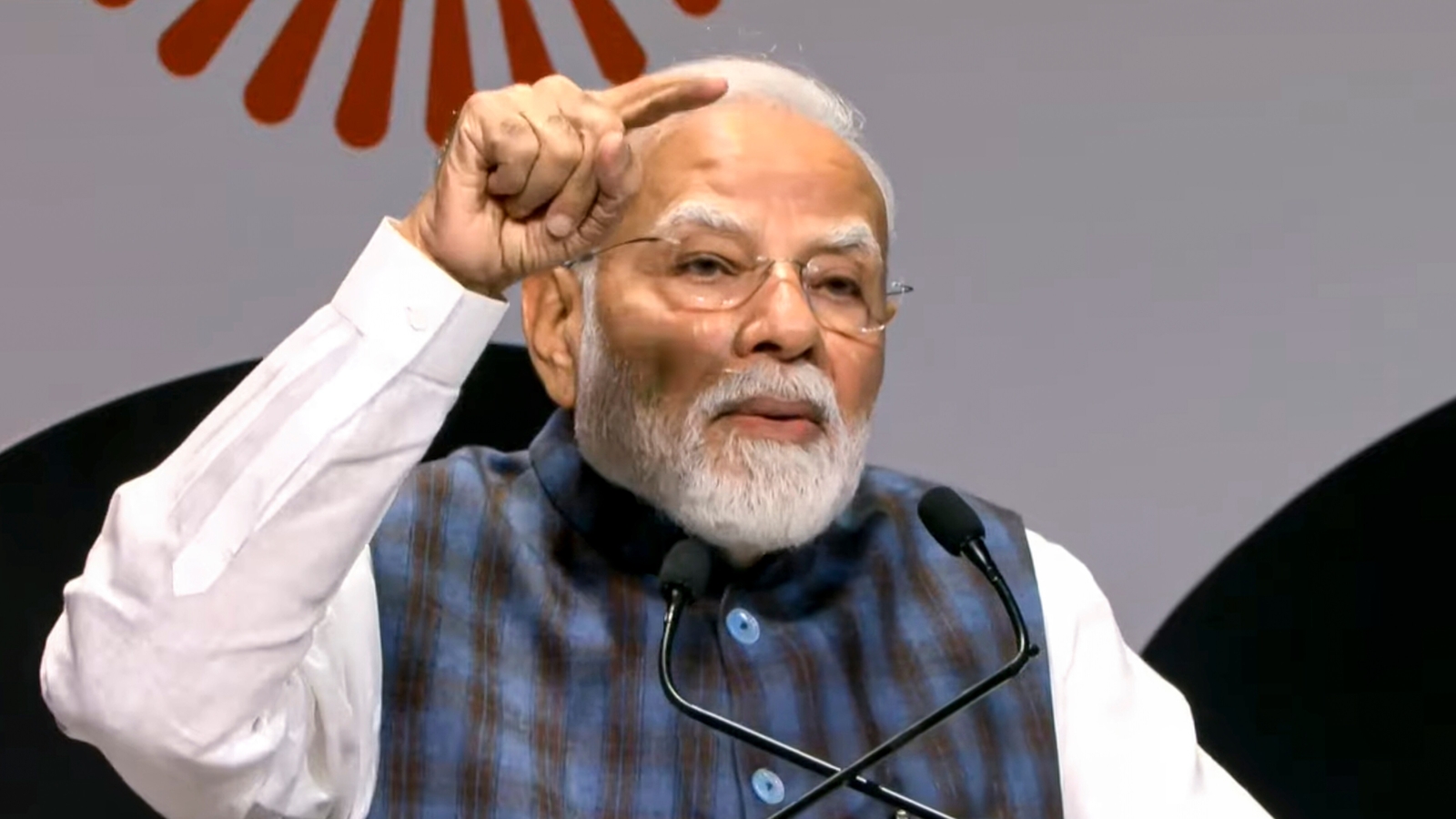
Prime Minister Narendra Modi on Thursday urged Indian industry to move beyond the assured 1.4 billion-strong domestic market and pursue global opportunities opened up by the country's free trade agreements. Speaking on "Bharat 2047" at the annual convention of the Federation of Indian Chambers of Commerce and Industry (FICCI) in New Delhi, he said the home market should give industry the confidence to compete abroad rather than serve as a comfort zone.
"Our domestic market should not be our comfort zone. It should rather give us the confidence to compete in global markets. So, invest in understanding the needs of customers in different regions of the world," Modi said, referring to recently concluded FTAs. India has concluded nine free trade deals with 38 countries in the past four-and-a-half years, gaining preferential access to their combined GDP of $60 trillion. At the CII Partnership Summit last week, commerce minister Piyush Goyal said that including earlier FTAs, India now has preferential market access to a GDP of nearly $70 trillion.
Modi said the assured domestic market should not make Indian industry complacent, and that it should keep improving the quality of goods and services for domestic consumers, who too deserve export-quality products. Industry must discard the thinking that the two consumer segments are different and that domestic consumers can be taken for granted, he said.
Noting that 2026-27 marks FICCI's centenary year, Modi said it was time to decide what Indian industry can achieve in the next 20 years, recalling Mahatma Gandhi's 1930 aspiration for an 'Aatmanirbhar Bharat'. He claimed the country had seen several changes in the last 100 years, including the licence-quota regime, an "unsuccessful" experiment of nationalisation and the "fragile-five" tag. He cited a recent World Bank report saying around 50 crore people had been lifted out of extreme poverty in India over the last 10-12 years, and said international agencies often revise India's growth projections upward. There was no immediate reaction from the Congress to his remarks.