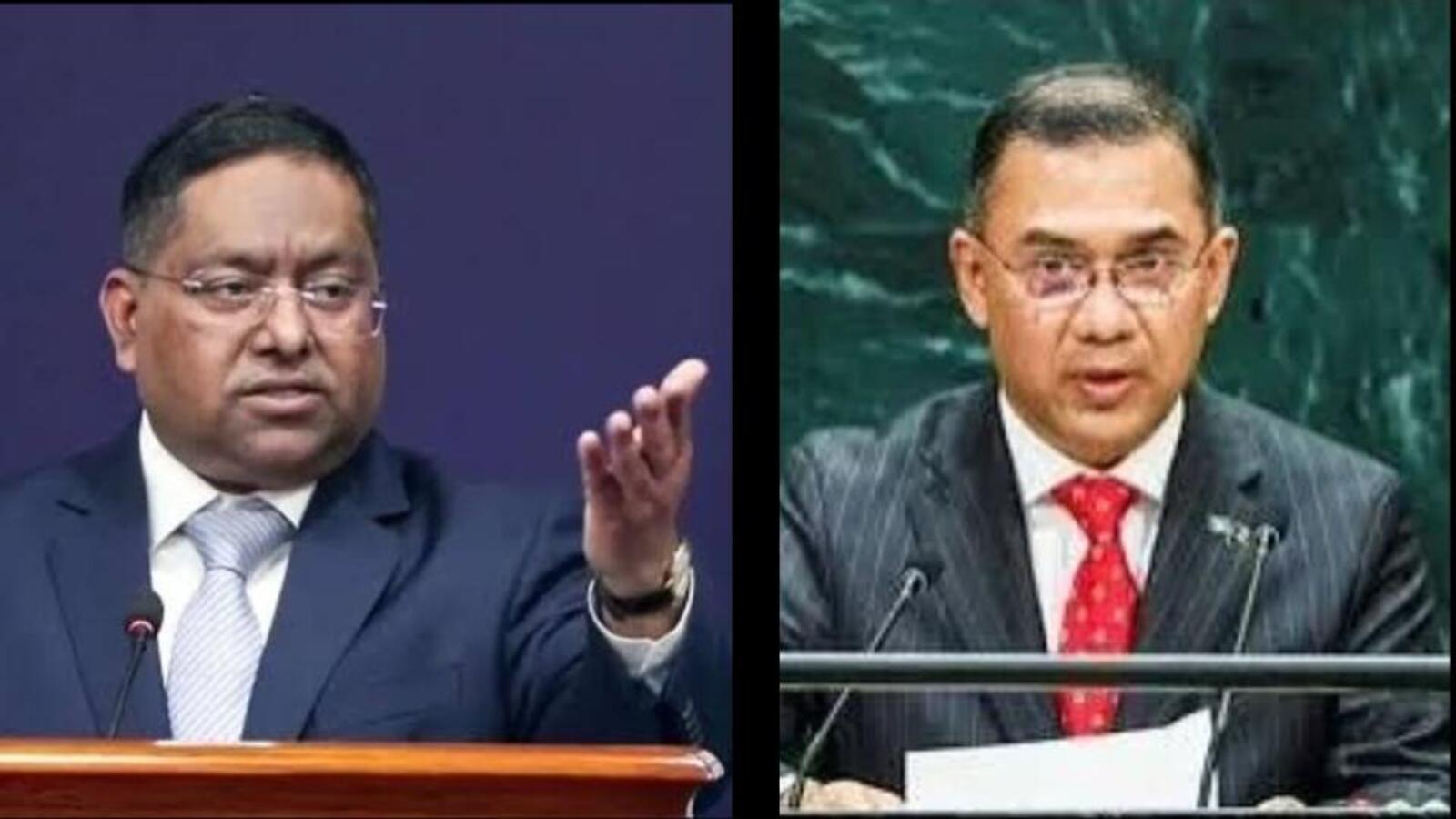
India on Friday declined to comment on Bangladesh Prime Minister Tarique Rahman's accusation that protests by the Awami League were being directed by masters "across the border", and reiterated its position that it desires positive and constructive ties with the neighbouring country.
Parts of Bangladesh saw violence on Thursday as members of former premier Sheikh Hasina's party attempted to halt businesses and public transport. The Awami League called a nationwide lockdown at the end of a week-long campaign of protests against the government's rejection of Hasina's request for a new passport to enable her to return home from India, where she has lived in self-exile since August 2024.
Asked about Rahman's remarks blaming the unrest on India and Awami League leaders based in the neighbouring country, external affairs ministry spokesperson Randhir Jaiswal said: "I have no comments to make on the internal developments in Bangladesh." Speaking at a public event in Lalmonirhat in northern Bangladesh on Thursday, Rahman said Awami League leaders "have not looked at the interests of Bangladesh and its people", and, without naming India, added that the country across the border where they have fled is their master.
Jaiswal repeated India's long-standing stance, saying: "Our position remains consistent — that India desires a positive, constructive and forward-looking relationship with Bangladesh, one which is rooted in the shared histories of the two countries and in their shared cultural ties of their peoples." He said he had "no update" on the extradition issue concerning Hasina, and on the Ganga Water Treaty, set to expire on December 12, said the India-Bangladesh Joint Rivers Commission is the established mechanism to discuss all water-related and cross-border river-related issues, including the Ganga.