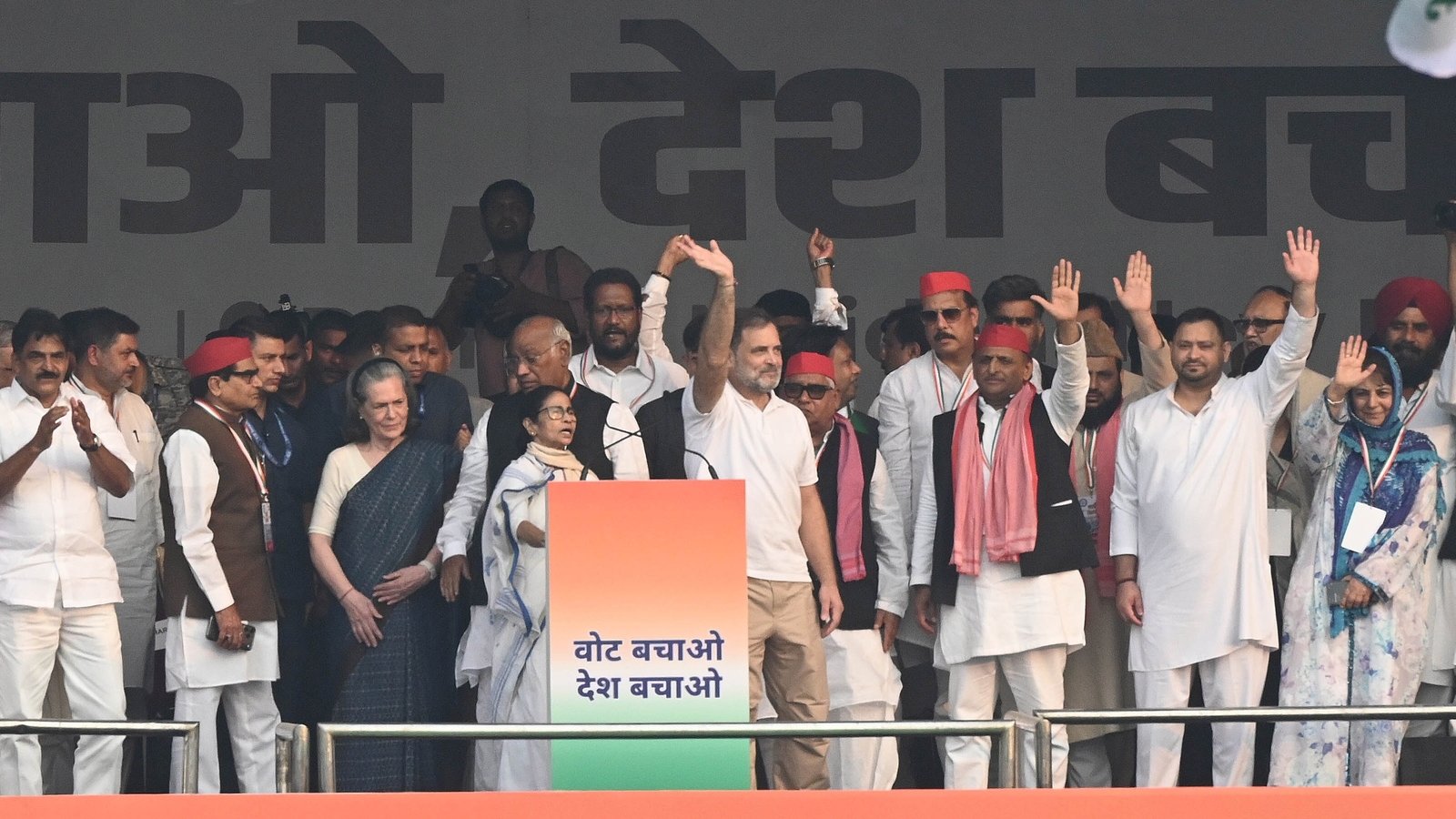
Leader of Opposition in the Lok Sabha Rahul Gandhi and 12 other Opposition leaders have moved an application in the Supreme Court seeking permission to pose 48 questions to Chief Election Commissioner Gyanesh Kumar, Election Commissioners Sukhbir Singh Sandhu and Vivek Joshi, and other poll panel officers. The application was filed on Monday, ahead of the hearing on a batch of petitions challenging the functioning of the Election Commission of India, including decisions related to the special intensive revision (SIR) of electoral rolls.
The petitioners — among them Rajya Sabha Leader of Opposition Mallikarjun Kharge, Samajwadi Party leader Akhilesh Yadav, TMC MP Saugata Roy, RJD leader Tejashwi Prasad Yadav, Shiv Sena (UBT) MP Sanjay Raut, CPI(M) general secretary MA Baby, CPI general secretary D Raja, JMM MP Mahua Majhi, NCP (Sharadchandra Pawar) MP Supriya Sule and IUML MP ET Mohammed Bashir — stated that they were not satisfied with the ECI's responses filed on October 26 and November 4, and termed its affidavit "unanimous". They said the counter affidavit "rests upon bare assertion" and makes claims without supporting notes or documents.
The application states that the affidavit was approved by a unanimous decision of the three members of the ECI but discloses no date, mode of approval, file or noting. It also notes that while the ECI asserted that SIR orders were issued in accordance with unanimous decisions, it identifies no decision or file and is silent on a response by the poll panel's First Appellate Authority to an RTI query stating that the commission had so far not taken any decision on initiating a SIR across the country in 2025.
The questionnaire seeks answers from the CEC and the two election commissioners on whether the affidavit was placed before each of them and whether any modification was suggested or reservation recorded. It also seeks a response from the two commissioners on their written objections or dissent between February 19, 2025 and October 26, 2026, and particulars of any decision relating to the SIR taken by majority. The petitioners argued that answering the questions would cause no hardship or prejudice as these are matters of record, and that leaving them unanswered would require the court to decide questions of grave constitutional significance without the record before it.